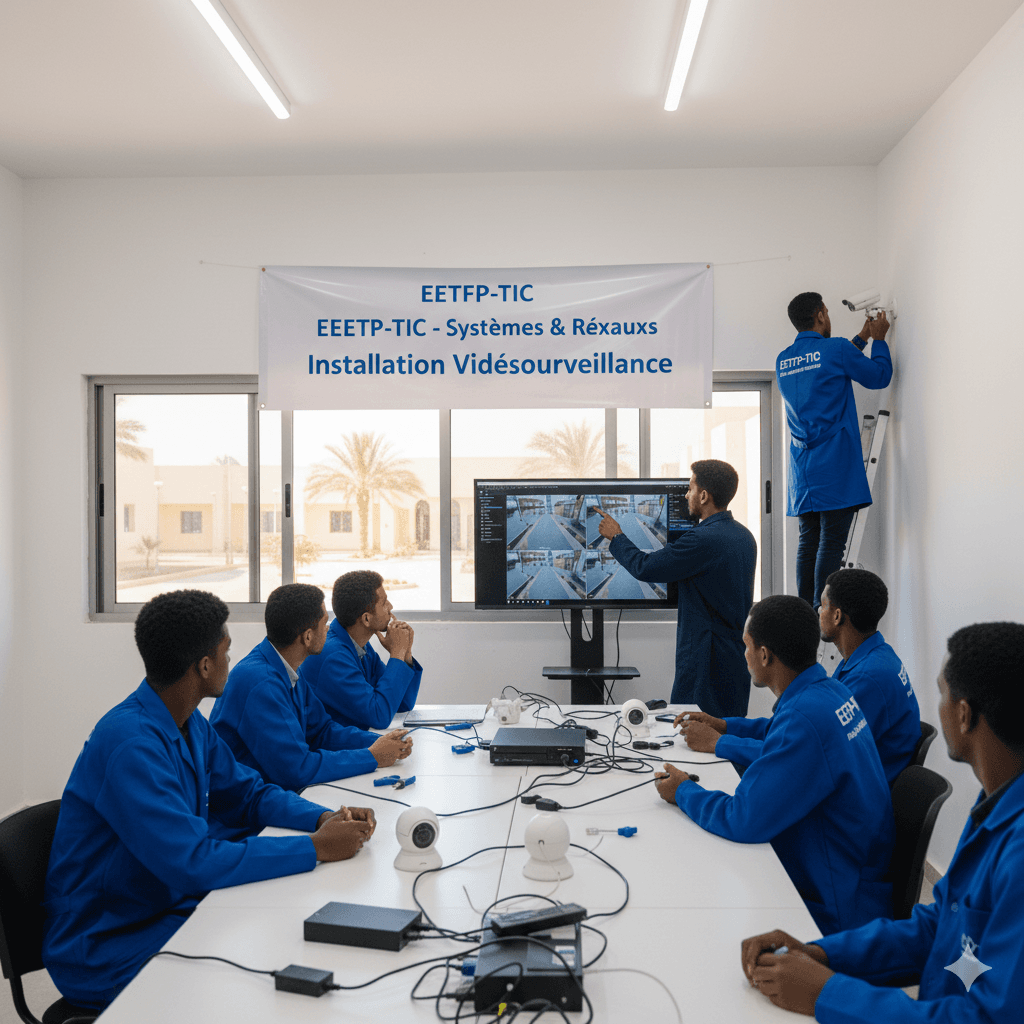
IT Maintenance: Hardware Repair and Fault Diagnosis
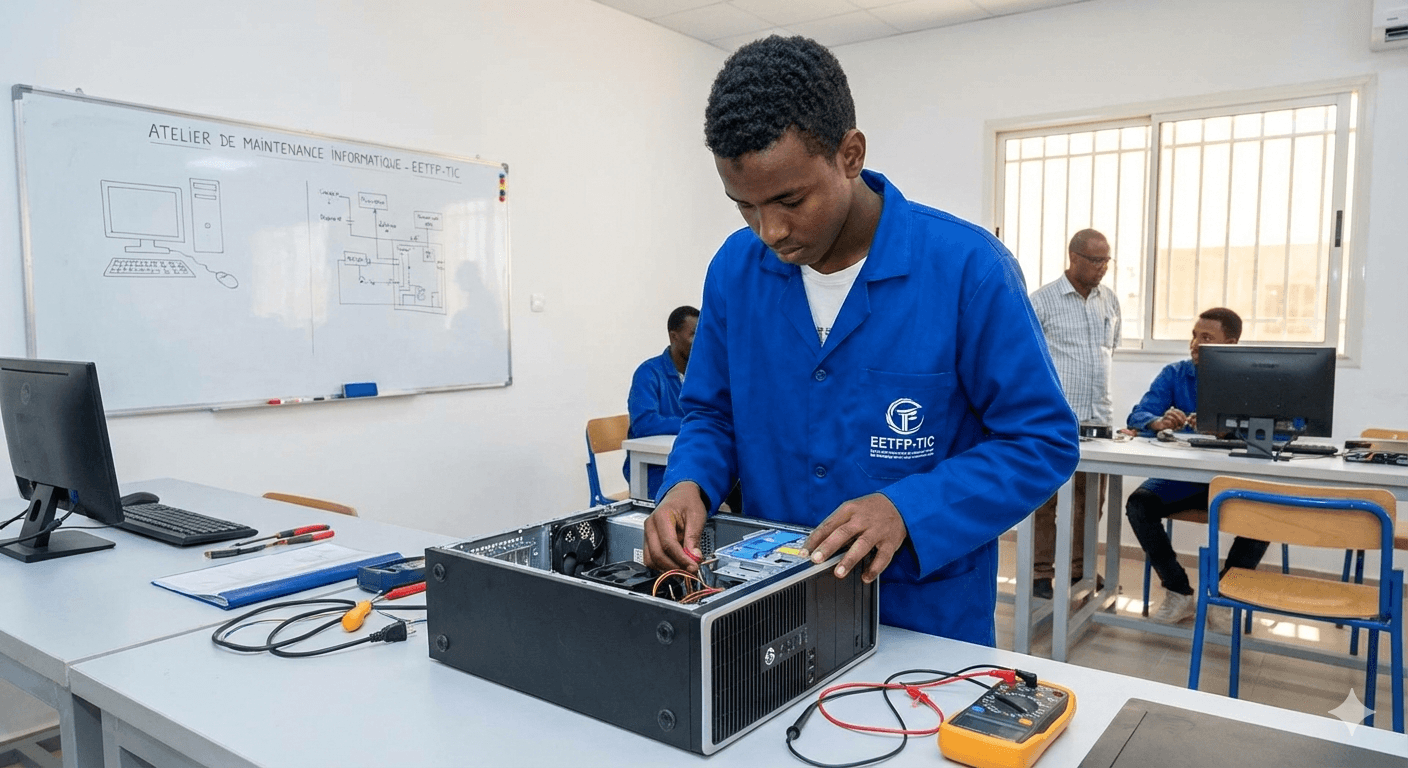
Hardware repair at the school goes far beyond simply swapping parts; it is a genuine immersion into the technological guts of a machine. Students learn to handle internal components — motherboards, power supplies, memory modules — with near-surgical precision, bringing back to life equipment often put through its paces by the local climate (heat and dust). This is where the technical gesture becomes a profession, turning a dead computer into an operational machine ready to serve the country's economy once again.
Fault diagnosis is the intellectual core of the training, demanding detective-like logic and unfailing rigor. Rather than proceeding by trial and error, future technicians are trained to follow a strict process of elimination, using measurement tools and testing software to pinpoint the exact origin of a malfunction. Whether it's an invisible short circuit or a complex hardware conflict, they develop the critical analytical ability that separates an amateur from an expert capable of guaranteeing an institution's continuity of service.
Finally, this specialty is an essential bulwark against technological obsolescence and waste in Mauritania. By mastering curative and preventive maintenance, the EETFP-TIC graduate becomes a key player in digital sovereignty, able to extend the lifespan of often costly infrastructure. More than a simple technical skill, it is a mission of trust: ensuring that every administration, bank, or SME can rely on dependable equipment to build its digital future.
The Technician's Toolkit (EETFP-TIC):
- Precision screwdriver kit (Phillips, flathead, Torx for recent laptops)
- Antistatic wristband (handling motherboards/RAM without static electricity)
- Digital multimeter (checking power supply/wall outlet voltage)
- Bootable USB drive (Windows, Linux, Hiren's BootCD, MemTest86)
- Thermal paste (CPU/fan heat transfer, hot climate)
- Compressed air can/blower (dust is enemy No. 1)
- Crimping tool and cable tester (making RJ45 cables)
- Precision pliers (long-nose + cutting)
- ATX power supply tester
- Isopropyl alcohol (cleaning thermal paste residue/oxidized contacts)